Comprehensive. Convenient. Compassionate.
A Division of Pomona Valley Hospital Medical Center
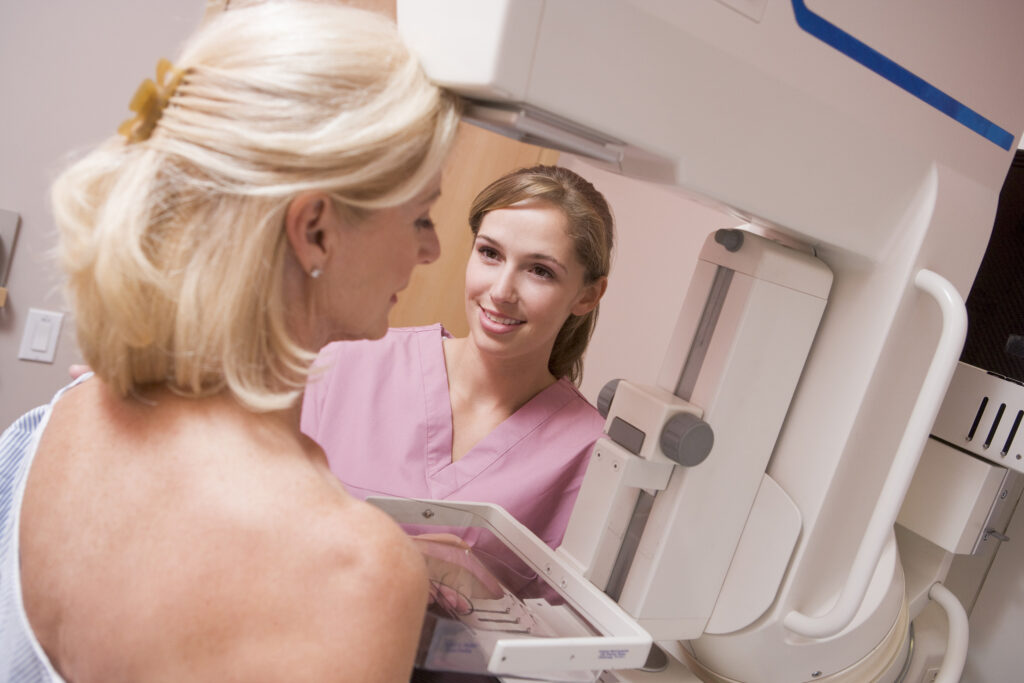
If you’re getting your first mammogram, it’s completely normal to feel a bit nervous. You might be wondering, “Are mammograms safe?”, “Will it hurt?”, “How long will it take?” or “What happens after?”
At Pomona Valley Health Centers (PVHC), we’re here to make the mammogram process as easy, quick, and comfortable as possible for you.
In fact, according to the National Institutes of Health, women who participated in mammography screening had a 41% reduction in their risk of dying of breast cancer within 10 years.
As part of Breast Cancer Awareness Month, we’ve written this mammogram guide to help you understand what happens during a screening mammogram, ease your anxiety and empower you to take charge of your breast health.
Early detection saves lives.
Mammograms are proven to find breast cancer much earlier—up to three years before you might feel a lump during a self-exam.
When breast cancer is diagnosed in its earliest stage, the five-year survival rate is 99 percent, meaning that women are 99 percent as likely as cancer-free women to live for at least five years after diagnosis.
This high survival rate is a key reason why early detection through preventive screenings, like mammograms, is so critical.
Most women between the ages of 40 and 74 should get a screening mammogram every one to two years.
However, women with one or more of the following risk factors may need more frequent or supplemental screenings, such as a bilateral ultrasound mammogram:
Once you reach age 40, your primary care provider will recommend scheduling your first mammogram. Depending on your insurance requirements, they may also provide you with a referral and prior authorization.
It is important to schedule this appointment as soon as possible, as there may be limited appointment availability.
On the day of your mammogram, be sure to bring a form of personal identification along with your insurance card, referral paperwork, and prior authorization form to your appointment.
Here are a few tips to help you be prepared for your first mammogram:
Once you arrive at the imaging center and check in, you will be asked to remove your clothes and jewelry from the waist up. PVHC has kimono-style wrap tops with a wide cross-over, allowing you to adjust the fit as needed to ensure full coverage and modesty.
Once you are in the room, your mammographer will help you get positioned and walk you through each step before taking any images.
Most women don’t find mammograms painful, though you may feel brief pressure during the procedure. If you have very sensitive breasts, please let your mammographer know, as there are techniques to help ensure a more comfortable experience.
A breast cancer screening mammogram should not take more than a few minutes to position you correctly at the machine and complete the imaging.
The procedure requires two images per breast (four images in total). For each image, you are only compressed for a few seconds. The machine automatically releases the compression paddle after the image is taken.
After your screening mammogram procedure, the mammographer will forward your images to an experienced radiologist for review and assessment.
Results will typically be available in your MYHEALTH Patient Portal within two weeks. However, if something is found, you will be contacted more quickly and potentially on the same day of your appointment.
If our radiology department finds an abnormality in your mammogram results, they may recommend a diagnostic ultrasound, mammogram or biopsy to further evaluate the abnormality.
These tests can help confirm your diagnosis and help your providers determine the next best steps for treatment.
Remember, most mammogram results are completely normal. If something does require a follow-up scan or procedure, it doesn’t necessarily mean cancer. Oftentimes, it’s just dense tissue or a benign change your provider wants to double-check.
It’s completely normal to feel anxious before your first mammogram. Many women do. Remind yourself that this test is quick, safe, and one of the most powerful tools for protecting women’s health.
Talking through your concerns with your provider or mammographer can also help ease these feelings and prepare yourself.
Before your screening mammogram, here are a few questions to ask your provider:
No, you typically do not need a referral for a routine screening mammogram at Pomona Valley Health Centers if you are over age 40, have no symptoms, and have not had a personal history of breast cancer.
However, if you are under age 40, have specific symptoms, or are getting a diagnostic mammogram, a referral may be required.
Please consult your insurance provider and PVHC directly to confirm your specific requirements.
Yes, if you have breast implants, you should still get regular screening mammograms as recommended—unless you had both breasts removed with a bilateral mastectomy before getting implants.
If you’ve had both breasts removed during a mastectomy and later had implants, a screening mammogram usually isn’t needed because all of the breast tissue has been removed.
Please consult your physician to determine whether a mammogram with breast implants is right for you.
The recommended frequency of mammograms depends on factors like age, family history, and overall health. Consult with your physician to determine the right frequency for you.
Here are some general recommendations:
Yes, it is generally considered safe for most women to get an annual screening mammogram.
Call 909-326-7556 or request an appointment online to schedule your mammogram today.
Screening and diagnostic mammography services are available at our Chino Hills, LA Verne, and Claremont locations.