Comprehensive. Convenient. Compassionate.
A Division of Pomona Valley Hospital Medical Center
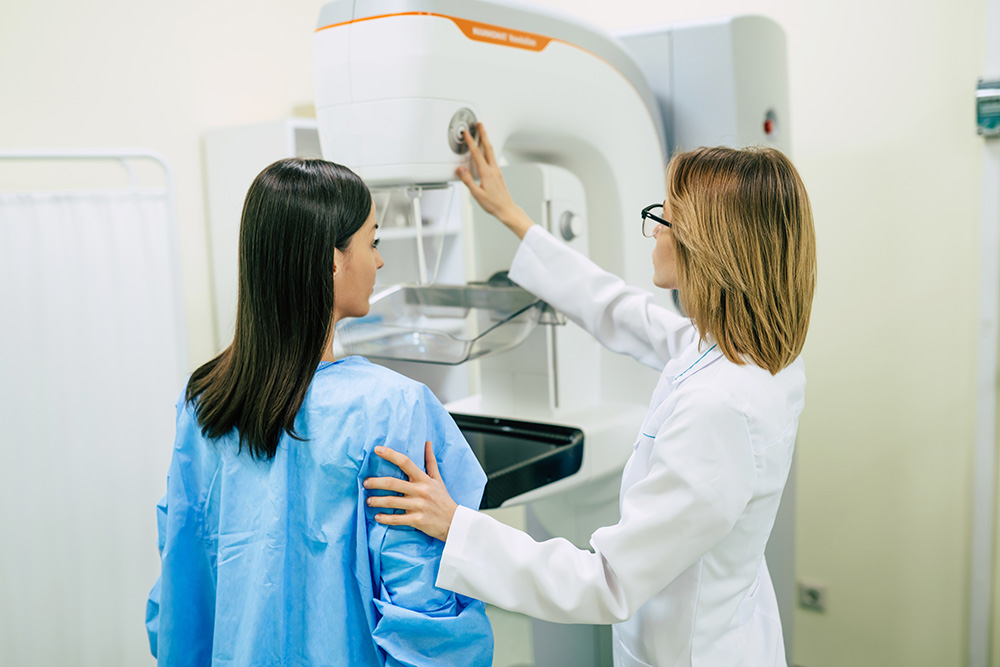
Every October brings a familiar wave of pink ribbons, awareness campaigns and conversations about breast health. But even with all that attention, one question tends to go unanswered for so many women: when should I start getting mammograms?
For women at average risk of breast cancer, major screening guidelines recommend beginning mammograms in their 40s. Women with certain risk factors may need to start screening earlier or follow a different schedule, which is why it is important to talk with your doctor about your personal risk and when to begin screening.
Pomona Valley Health Centers offers easy-to-schedule mammogram services as part of our women’s health services. Whether you’re preparing for your first mammogram or it is time for your next screening, our team can help you take the next step.
Here, we’ll explain current mammogram guidelines, how often screening may be recommended and why your individual breast cancer risk matters.
Mammograms can detect breast cancer before a lump can be felt or other symptoms develop. When breast cancer is found while it is still localized, the five-year relative survival rate is approximately 99%, according to the American Cancer Society.
Finding breast cancer earlier can also provide patients and their care teams with more treatment options. The treatment recommended for an individual patient depends on several factors, including the type and stage of cancer, tumor characteristics and overall health.
A mammogram is an important screening tool that can identify changes in breast tissue that may need additional evaluation. Staying current with appropriate screening gives you and your doctor valuable information about your breast health.
For women at average risk, breast cancer screening guidelines generally begin mammography in the 40s, although recommendations for how often to screen vary by organization.
The U.S. Preventive Services Task Force recommends that women ages 40 to 74 at average risk receive a mammogram every two years.
The American Cancer Society recommends that women ages 40 to 44 have the option to begin annual screening, women ages 45 to 54 receive mammograms annually, and women 55 and older may transition to screening every two years or continue annually.
Because guidelines differ, talk with your doctor about your health history, breast cancer risk and the screening schedule that is appropriate for you.
Women may be considered at average risk if they do not have a personal history of breast cancer, a strong family history of breast cancer, a known genetic mutation associated with increased breast cancer risk or a history of chest radiation therapy at a young age.
For patients at average risk, age 40 is an important time to begin discussing mammography with a healthcare provider. Your doctor can help you understand current screening guidelines and decide when to schedule your first mammogram and how frequently you should continue screening.
Some women may need to begin breast cancer screening earlier or receive additional screening based on their individual risk.
Factors that may increase breast cancer risk include a strong family history of breast cancer, certain inherited genetic mutations, a personal history of breast cancer or previous radiation therapy to the chest at a young age.
If you have an increased risk of breast cancer, talk with your doctor about when screening should begin and whether additional imaging may be appropriate. PVHC also provides a variety of women’s health services to support your health throughout every stage of life.
How often you should have a mammogram depends on factors such as your age, breast cancer risk and the screening guidelines you and your doctor follow.
Current recommendations vary.
The U.S. Preventive Services Task Force recommends mammograms every two years for average-risk women ages 40 to 74.
The American Cancer Society recommends annual screening for women ages 45 to 54, with the option to begin annual mammograms between ages 40 and 44. Beginning at age 55, women may transition to screening every two years or continue annually.
Screening frequency involves balancing the benefits of detecting breast cancer earlier with potential risks, including false-positive results that may lead to additional testing.
Talk with your doctor about your personal and family health history to determine the screening schedule that makes sense for you. Regular mammography can be an important part of your overall preventive care.
Breast Cancer Awareness Month is an opportunity to think about your own breast health and whether you are up to date with recommended screenings.
In addition to mammography, knowing how your breasts normally look and feel can help you recognize changes. If you notice a new lump, swelling, skin changes, nipple changes or anything else that feels unusual for you, talk with your healthcare provider rather than waiting for your next routine screening.
Breast awareness does not replace mammography. Mammograms can detect some breast cancers before physical changes can be felt, making appropriate screening an important part of preventive care.
If you are due for a mammogram or aren't sure when you should have your next one, October is a good time to start the conversation with your healthcare provider.
It is normal to have questions before your first mammogram. Fortunately, the screening process is generally quick and straightforward. From check-in to the final image, most appointments take less than 30 minutes.
During the exam, a mammography technologist will guide you through each step. Your breast will be positioned and briefly compressed for several seconds at a time so clear images can be captured. You may experience some temporary pressure or discomfort during compression, but the imaging itself only takes a short time.
Federal mammography standards require mammography facilities to include breast density information in the results summary patients receive. Breast density describes the amount of fibrous and glandular tissue compared with fatty tissue in the breasts, and dense breasts are very common.
Having dense breasts does not mean you have breast cancer, but breast density can affect how well abnormalities can be seen on a mammogram and is also associated with breast cancer risk. Your doctor can help you understand what your breast density means for your individual screening plan.
Pomona Valley Health Centers has five convenient Southern California locations, and our board-certified providers are ready to care for patients at every age and stage of life.
Whether you need a physician for yourself or want your whole family covered under one roof, our compassionate team is great to work with and very easy to reach. Give us a call, it's the first step to take.
A mammogram appointment that's been pushed to "later" deserves better than that. Call 909-630-7829 to reach our team directly or go online to schedule an appointment if that's easier for you - it's a pretty small step and the relief on the other side of it makes it well worth your time.
We know that figuring out when and how to get screened can feel overwhelming, so we've pulled together answers to some of the most common questions we hear on this topic.
No single stopping age is universally agreed upon, and most guidelines suggest making the decision individually based on your overall health and life expectancy. Many doctors recommend continuing annual or biennial screenings through your 70s if you are in good health. The best thing to do is have an honest conversation with your provider about what makes sense for you personally.
We recommend reaching out to us directly to find out what is needed before your visit. You can call us at 909-630-7829 or request an appointment online, and our team will walk you through everything you need to get scheduled quickly and easily.
Most insurance plans cover screening mammograms, especially for women in the age ranges recommended by major health organizations. Coverage details can vary depending on your specific plan, so it is always a good idea to check with your insurance provider before your appointment to understand any out-of-pocket costs.
A screening mammogram is a routine scan done when you have no symptoms - it is preventive and meant to catch anything unusual early. A diagnostic mammogram is ordered when something specific needs a closer look, such as a lump, pain, or an unclear result from a previous scan. Diagnostic imaging is generally more detailed and may take longer than a standard screening.